
As a career and executive coach for women leaders, I look at LinkedIn profiles all day long—and I keep seeing the same simple mistakes.
And these mistakes? They might be repelling the very jobs you want.
So I wanted to set the record straight and give you the top 3 Linkedin profile optimization tips that might be the difference between landing the job dream job you love.. and getting passed over online.
Even if you’re actively job searching, your LinkedIn profile could be turning people away instead of pulling in the executive-level roles you’re dreaming about.
I have clients who have been hired straight off of Linkedin—without ever updating their official CV! So even just one of these tips might be the one that gets you hired for your next role.
So before we dive into the tips, let’s start with what Linkedin can do for you to land your next role:
Think of LinkedIn as Your Always-On Storefront to Attract Your Dream Employer
Your LinkedIn profile is open 24/7. Even while you’re asleep, someone could be checking you out.
If you’re networking to find your next role (which is one of the top strategies we teach in my programs), people will click through to your profile. If it doesn’t clearly tell them what you do and what you want, they’ll walk away with the wrong impression—or worse, no impression at all.
The same goes for companies reviewing your application. If they don’t instantly see that you’re a fit, that might be the difference between getting the interview or getting passed over.
Here are the top 3 mistakes women leaders make on LinkedIn, plus one bonus tip that could change everything.
Mistake #1 – A Vague Headline
This shows up in two ways:
Abstract titles like Creative Changemaker (sounds nice but means nothing to a recruiter).
“I help” statements like I help organizations achieve change management (but don’t clearly say who you are.)

People often lead with headlines like these because they want to keep doors open to all the potential job opportunities that might be a fit, but it’s a mistake.
Turns out, the more specific you are, the more opportunities you’ll actually attract.
Why? Because when someone lands on your profile, they’re scanning. You have 30 seconds—tops—for them to size you up.
And while I know you’re screaming, “But I’m a special snowflake!”—the truth is: You do want to be put in a box. That’s how someone sees you as the solution to their problem.
So instead of making them translate your complex experience, your profile should already make it clear.
If you want to be a Head of Product? Say Head of Product.
If you haven’t held that title yet, say Product Leader—and maybe include the industry you want to work in. Clear beats clever every time.
Mistake #2 – Leading With Irrelevant Roles
When I land on someone’s profile and the first thing I see is a board seat, a volunteer gig, or a professional membership (like Chief, the executive women’s network), it’s often distracting.
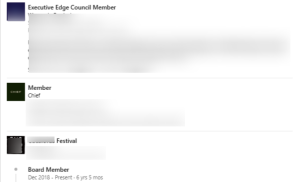
Especially for women executives transitioning roles or returning to the workforce, these extras can clutter the path between who you are and what you want.
You want someone to land on your most recent job and immediately get: What problems do you solve? What value do you bring?
If you’ve been out of work for a bit, it’s tempting to pad your profile. But if that content isn’t directly aligned with the next role you want, it just adds confusion.
And if you’re pivoting careers or going for a stretch role?
Optimize your bullet points for the job you want.
Example: Let’s say you were an Executive Director at a nonprofit, and now you want to be a COO. You likely wore many hats—fundraising, board management, operations.
Only include bullet points that speak to your operations wins. Everything else? Let it go.
I once worked with a multi-passionate client who had done so many things that reading her profile felt like walking into a cluttered alley. You couldn’t see the through line.
You want clarity. You want someone to say, She’s exactly who we need.
Mistake #3 – Keeping Outdated Skills in Your LinkedIn Profile that aren’t Aligned with the Job you Want
Your skills section is searchable.
So if you’re trying to get recruited into a new or next-level role, but the relevant skills aren’t listed on your profile? You’re doing yourself a disservice.
And this is sneaky—because endorsements from others may be outdated.
I used to be a designer. And even 12 years into my career coaching business, my profile still had people endorsing me for sustainability—a skill that had been irrelevant for years.
Cleaning that up helped me tell a clearer, more current story about who I am now.
Bonus – Use Your LinkedIn Posts to Position Yourself
Your posts are valuable real estate for showing that you’re already operating at the level of the role you want.
One of my clients—a marketing leader—wanted to grow into a Chief Marketing Officer role. She had the experience, the TEDx talks, the accolades.
But her posts were mostly about her accomplishments—not about solving marketing problems.
You want people to see your posts and think: She gets it. She’s solving exactly what we’re dealing with.
That might mean:
Sharing a growth marketing result
Explaining how you interpreted the data
Offering insight into something most people overlook
This helps people start to associate you with the role you want. And it gives them a taste of what it would feel like to work with you.
You don’t need to post daily. But you do want your posts to reflect the role and level you’re aiming for.
If you want to be a CMO? Start posting like one—now.
These shifts might be the difference between waiting months for the right role… or getting an interview next week.
One of my clients was in the job market for months. Two weeks after we perfectly positioned her, she had three offers.
Perfect positioning is just one step in the five-part process we take our clients through—from identifying the right role to developing the executive success persona that makes you a shoo-in.
Ready to Get Clear on What’s Holding You Back in Your Job Search?
Take our 5-minute assessment to pinpoint the exact obstacle between you and your next role.